A beautiful home can still feel stressful when everyday routines do not work well. Shoes pile up near the door, paperwork covers the kitchen counter, and family members constantly ask where things belong. That is why family organization systems are so important. The right systems help everyone in the home know what to do, where items belong, and how to keep spaces organized without constant reminders.
Many organizing systems fail because they focus more on appearance than real life. Matching bins and perfectly styled pantries may look beautiful online, but they often stop working after a few weeks when they do not fit the habits of the people living in the home.
The best systems are practical. They are designed around how the household actually functions every day. This is especially important in busy homes where work schedules, children, travel, guests, and entertaining all affect daily routines.
Why Most Family Organization Systems Fail
Many people assume organization fails because family members are messy or unmotivated. In reality, most organizing systems fail because they are unrealistic for everyday life.
A successful organizing system should feel easy to maintain, even during rushed mornings, busy school weeks, work travel, or stressful seasons of life. If a system takes too much effort to maintain, people naturally stop using it.
This is one of the biggest reasons homeowners become frustrated. They spend time and money organizing their spaces, only to watch the clutter slowly return. The problem is usually not the people living in the home. The problem is that the system was designed without considering how the household actually functions.
Good organization should support real habits, not fight against them.
Most Organizing Systems Are Built for Looks Instead of Daily Life
Social media has changed the way many people think about home organization. Perfectly folded towels, matching storage bins, and highly detailed labels look beautiful online. However, many of those systems are difficult to maintain in real homes with busy schedules and multiple people sharing the space.
For example, a pantry may look polished immediately after being organized. Every snack is placed inside matching containers, labels are perfectly aligned, and shelves are color coordinated. A few weeks later, the system starts to fall apart.
Children may not want to open multiple containers to grab snacks. Adults rushing out the door may place groceries wherever there is space. Guests may not know where items belong. Eventually, the system becomes frustrating to maintain.
A beautiful system is not always a functional system.
The best family organization systems combine appearance and practicality. A home should feel polished while still being easy to live in every day.
Storage Is Too Far From Where Items Are Used
One of the most common mistakes is storing items far away from where they are needed.
For example:
- Shoes stored in bedroom closets instead of near the entryway
- Cleaning supplies kept on another floor
- Mail stations placed far from where mail naturally collects
- Children’s backpacks stored nowhere near the door
People naturally choose convenience. If putting something away feels difficult, most people will leave it out instead.
This is why professional organizers pay close attention to daily movement throughout the home. They study where clutter builds naturally and create systems around those habits.
Labels Are Too Complicated
Labels can help organization, but too many labels often create confusion.
Some homeowners create overly detailed categories such as:
- School snacks
- Travel snacks
- Healthy snacks
- Lunch snacks
- Sports snacks
While this may look organized initially, maintaining those categories becomes difficult over time.
Simpler systems usually work better.
Broad categories like:
- Snacks
- Breakfast items
- Baking supplies
- Drinks
are easier for everyone in the household to follow consistently.
The easier a system is to understand, the more likely people will maintain it.
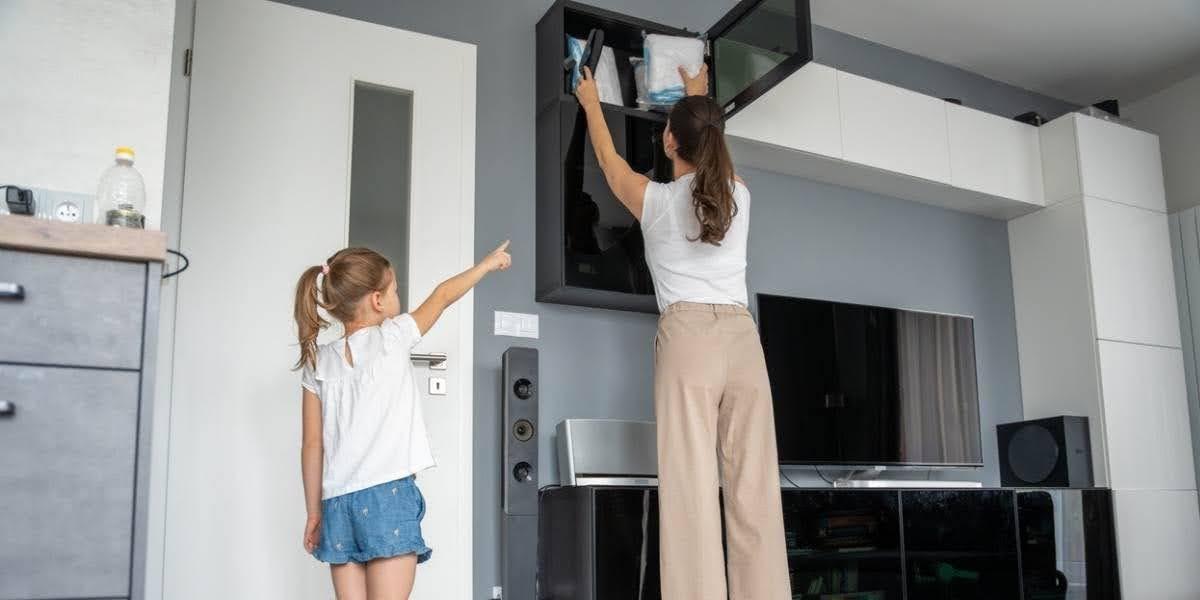
Children Cannot Reach or Maintain the System
Many organizing systems fail because they are designed only for adults.
Young children often struggle with:
- Heavy bins
- High shelves
- Difficult lids
- Complicated folding systems
- Too many categories
If children cannot easily use the system on their own, parents end up managing everything constantly.
Child-friendly systems are usually:
- Lower to the ground
- Simple to open
- Easy to understand
- Designed with fewer steps
For example, open toy bins often work better than detailed toy sorting systems for younger children. The simpler the cleanup process feels, the more likely children are to participate.
Shared Spaces Have No Clear Rules
Shared spaces often become cluttered because responsibilities are unclear.
This commonly happens in:
- Entryways
- Kitchens
- Bathrooms
- Laundry rooms
- Family rooms
Without clear systems, people tend to place items wherever there is available space.
Questions family members often ask include:
- Where does this belong?
- Who is responsible for this area?
- Can I leave this here?
- Which drawer should I use?
When answers are unclear, clutter builds quickly.
Strong family organization systems create simple guidelines that everyone understands. That does not mean strict rules or perfection. It simply means creating enough structure that daily routines feel easier.
The System Requires Too Many Steps
People are far more likely to maintain systems that feel quick and convenient.
If organizing requires multiple steps, the system usually breaks down over time.
For example:
- Removing lids
- Opening several containers
- Folding items perfectly
- Sorting into tiny categories
- Carrying items across the house
These small inconveniences add up.
This is especially true during stressful periods when people have less energy and time.
Many professional organizers focus on reducing “friction” inside the home. Friction refers to anything that makes a task feel harder than necessary.
The less effort a system requires, the more sustainable it becomes.
The System Does Not Match Real Routines
This is often the biggest reason systems fail.
Some homes are designed around ideal routines instead of actual routines.
For example:
- A homeowner may want everyone to remove shoes immediately, but the entryway has nowhere convenient to place them.
- Parents may want children to hang up backpacks neatly, but there are not enough hooks.
- Families may want organized countertops, but there is no designated space for paperwork or charging devices.
When systems ignore real behavior patterns, clutter always returns.
Good organization starts by observing what people naturally do every day.
Professional organizers often ask:
- Where does clutter collect repeatedly?
- Which spaces feel stressful?
- What routines feel rushed?
- Which items are hardest to maintain?
The answers reveal what the household truly needs.
The Foundation of Strong Household Organization Systems
Good household organization systems begin with understanding how the home works every day.
Before buying bins or containers, it helps to watch daily patterns and routines.
Questions to Ask Before Organizing
Every household is different. Start by asking:
- Where does clutter collect most often?
- Which rooms feel stressful?
- What routines create frustration?
- Which items are hardest to keep organized?
- Who uses each space the most?
- Are children, guests, or staff involved?
The answers help reveal what the home truly needs.
A family that entertains often will need different systems than a quiet seasonal home. A household with young children will need different storage than an empty nest home.
The goal is not perfection. The goal is creating a home that works better for everyday life.
Create Systems Around Real Habits
One of the biggest mistakes homeowners make is building systems around ideal habits instead of real habits.
For example, if mail always ends up on the kitchen counter, the solution is not repeatedly telling everyone to stop. A better solution is creating a mail station near the entryway.
Watch Daily Patterns
Spend a few days noticing how your home functions:
- Where do shoes usually end up?
- Where are bags dropped?
- Which drawers become messy the fastest?
- What items are always left out?
- Which spaces frustrate family members most?
These patterns show where organizing systems are needed.
Make Organization Convenient
People naturally choose the easiest option available.
That means:
- Laundry hampers should be easy to reach
- Charging stations should be near common sitting areas
- School supplies should stay near homework spaces
- Everyday dishes should be close to the dishwasher
- Donation bins should be simple to access
Small changes often create the biggest improvements.
Why Simplicity Matters in Family Organization Systems
Simple systems last longer.
Complicated systems usually fail because they take too much effort to maintain.
Signs a System Is Too Complicated
You may need to simplify if:
- Family members constantly ask where things belong
- Labels need explanations
- Folding laundry takes too long
- Storage containers are difficult to open
- People avoid putting things away
Good systems should feel natural and easy to follow.
Easy Systems People Can Maintain
Simple systems often include:
|
Area |
Simple Solution |
Why It Works |
|
Entryway |
Open baskets for shoes |
Easy daily access |
|
Pantry |
Broad food categories |
Faster cleanup |
|
Closet |
Clothing grouped by type |
Easier to maintain |
|
Bathroom |
Drawer dividers |
Keeps items separated |
|
Garage |
Large labeled zones |
Prevents clutter buildup |
The easier the system feels, the more likely people will maintain it.
Design Systems for Multiple People
Shared spaces need flexibility.
One person may naturally stay organized while another struggles with routines. Strong systems support both personalities without creating tension.
Create Clear Ownership
Shared spaces often become messy because responsibilities are unclear.
Helpful ideas include:
- Individual bathroom drawers
- Dedicated pantry shelves
- Personal drop zones
- Separate storage bins
- Assigned laundry baskets
Ownership creates accountability.
Make Systems Easy to See
People are more likely to use systems they can clearly see.
Helpful solutions include:
- Clear containers
- Open shelving
- Simple labels
- Consistent item placement
- Easy-access storage
When systems are hidden or overly detailed, people stop using them.
Family Organization Systems for Homes With Children
Children can absolutely help maintain organized spaces when systems are designed correctly.
The key is building systems that match their age and abilities.
Create Child-Friendly Systems
Young children usually need:
- Lower hooks
- Easy-open bins
- Picture labels
- Fewer categories
- Simple cleanup routines
Many parents accidentally create systems that only adults can maintain.
For example, younger children often do better with broad toy categories like:
- Building toys
- Art supplies
- Stuffed animals
- Outdoor toys
Simpler systems reduce frustration for everyone.
Teach Organization Slowly
Children learn organization through repetition and routine.
Instead of expecting perfection immediately:
- Practice short cleanup sessions
- Keep instructions simple
- Use visual reminders
- Focus on consistency
- Praise effort and participation
The goal is building habits over time.
Organizing Luxury Homes Requires More Planning
Large homes can hide clutter more easily. That means disorganization often builds slowly behind closed doors.
Luxury households also tend to have:
- Large closets
- Seasonal wardrobes
- Guest rooms
- Frequent travel
- Entertaining supplies
- Household staff
- High-end collections
These homes need more thoughtful planning.
Avoid Filling Every Space
Large storage areas often encourage people to keep too much.
Oversized pantries, large closets, and extra cabinets can quickly become overcrowded without clear limits.
Instead:
- Create clear categories
- Leave open space intentionally
- Rotate seasonal items
- Edit belongings regularly
- Keep only what supports your lifestyle
An organized luxury home should feel calm, not crowded.
Blend Beauty and Function
High-end homes work best when systems feel both beautiful and practical.
That may include:
- Matching storage containers
- Neutral labels
- Hidden utility spaces
- Boutique-style closets
- Clean visual spacing
The home should feel polished without looking overly structured.
Household Organization Systems Can Reduce Stress
Organization affects more than appearance. It also changes how a home feels emotionally.
Research from UCLA found that cluttered environments can increase stress levels, especially for women.
When systems work well, daily life often feels calmer and easier.
Spaces That Usually Create the Most Stress
Certain rooms tend to create the most frustration:
- Kitchens
- Closets
- Entryways
- Laundry rooms
- Garages
- Home offices
These areas usually involve heavy daily use and multiple people.
Focus on High-Impact Changes
Small improvements in these spaces can make daily routines feel easier.
Examples include:
- Grab-and-go snack stations
- Charging drawers
- Donation bins
- Drawer organizers
- Entryway drop zones
Simple changes often create noticeable relief.
Maintenance Matters
Even the best systems need occasional maintenance.
The difference is that strong systems make maintenance much easier.
Weekly Reset Habits
Many organized households follow simple weekly routines:
- Return misplaced items
- Clear counters
- Empty donation bins
- Refill supplies
- Tidy shared spaces
- Sort paperwork
Most resets take less than 20 minutes when systems are working properly.
Seasonal Maintenance Helps Too
Homes naturally change throughout the year.
Seasonal resets help manage:
- Holiday decorations
- School supplies
- Seasonal clothing
- Sports equipment
- Guest preparation
- Travel items
Homes function better when systems change with the family’s needs.
Personalized Systems Work Better Than Trends
Social media often promotes organizing trends that look beautiful but do not fit real life.
Perfectly labeled pantries and highly detailed systems may look impressive online, but many busy households struggle to maintain them.
Organization Should Match Your Lifestyle
Your systems should support how you actually live.
For example:
- Frequent travelers may need simplified wardrobes
- Families with staff may need clearly labeled utility spaces
- People who entertain often may need accessible serving storage
- Busy professionals may prefer low-maintenance systems
Personalized systems usually last much longer.
Avoid Copying Online Trends Without Thinking
Before copying an organizing trend, ask yourself:
- Will this realistically work for my household?
- Can everyone maintain this system?
- Does this simplify life or create more work?
- Will this still work six months from now?
Beautiful systems should also feel practical.
Digital Family Organization Systems Matter Too
Physical clutter is not the only source of stress. Digital clutter can create problems as well.
Modern households manage:
- Shared calendars
- School emails
- Grocery lists
- Travel plans
- Household documents
- Bills and expenses
Without organization, important information gets lost easily.
Helpful Digital Systems
Consider creating:
- Shared family calendars
- Cloud-based household folders
- Shared grocery apps
- Travel planning folders
- Home maintenance checklists
Digital organization helps daily routines run more smoothly.
How Professional Organizers Create Lasting Systems
Professional organizers focus on systems that last, not just temporary perfection.
The best organizing projects involve much more than buying containers.
What Professional Organizers Look At
Professional organizers usually evaluate:
- Traffic flow
- Daily routines
- Storage limitations
- Household habits
- Maintenance ability
- Lifestyle changes
The goal is creating systems that continue working long-term.
Why Professional Help Can Make a Difference
Homeowners are often too close to the problem to see simple solutions.
A professional organizer can identify:
- Unused storage opportunities
- Inefficient layouts
- Overcomplicated systems
- Hidden clutter patterns
- Better ways to arrange spaces
An outside perspective often saves time and frustration.
Signs Your Household Organization Systems Need Improvement
Sometimes clutter is not the real problem. The bigger issue is that the organizing systems no longer fit the way the household functions.
Homes naturally change over time. Children grow older, schedules become busier, routines shift, and lifestyles evolve. A system that worked perfectly a few years ago may no longer support the household today.
This is one reason many homeowners feel frustrated. They may believe they are simply disorganized, when in reality their systems are outdated or no longer practical for their current lifestyle.
Good organization is not something you create once and never revisit again. Strong systems should grow and change along with the household.
Recognizing the warning signs early can help prevent clutter, stress, and daily frustration from building over time.
Clutter Returns Quickly After Cleaning
One of the clearest signs your household organization systems need improvement is when clutter returns almost immediately after cleaning.
You may spend hours organizing a room only to find it messy again within a few days.
This usually means the system is not practical for daily use.
For example:
- A pantry may look organized after a reset, but items quickly become mixed together.
- A closet may feel clean after decluttering, but clothing piles up again on chairs or benches.
- Kitchen counters may constantly collect paperwork, bags, and random items.
When clutter repeatedly returns to the same places, it often signals that the home is missing functional systems for those areas.
The issue is usually not laziness. The issue is that the system does not support real routines.
Family Members Avoid Putting Things Away
Another major warning sign is when people avoid using the organizing system altogether.
This often happens when systems feel:
- Too complicated
- Difficult to access
- Time-consuming
- Confusing
- Unrealistic for daily life
For example:
- Children may avoid putting toys away if bins are heavy or difficult to reach.
- Adults may stop folding clothing neatly if the closet feels overcrowded.
- Family members may leave items on counters because storage areas are inconvenient.
People naturally choose the easiest option available.
If putting something away feels harder than leaving it out, clutter will slowly build over time.
Good household organization systems should feel simple and natural to maintain.
Storage Areas Feel Overcrowded
Closets, drawers, garages, and pantries should not feel stressful to open.
When storage spaces become overly full, it usually means the system is no longer working properly.
Common signs include:
- Drawers that barely close
- Overflowing shelves
- Packed closets
- Stacked storage bins
- Difficulty finding items quickly
Overcrowded spaces often create more clutter because people stop putting items away correctly.
This also makes cleaning and maintaining the home more difficult.
Many homeowners assume they simply need more storage. In reality, the problem is often that the household has outgrown its current systems or is storing too many unnecessary items.
A good organizing system leaves room for everyday life. It should not feel packed to the limit.
You Constantly Buy Duplicate Items
Buying duplicates is another common sign that organization systems need improvement.
Many households accidentally purchase:
- Extra toiletries
- Duplicate pantry items
- Additional chargers
- Repeated cleaning supplies
- Extra clothing basics
This usually happens because items are difficult to find.
When storage systems are disorganized or overcrowded, people stop knowing what they already own. As a result, they buy more.
This creates additional clutter and wasted money.
Clear categories, visible storage, and organized inventory systems help reduce duplicate purchases significantly.
Daily Routines Feel More Stressful Than They Should
A well-organized home should support daily life, not make it harder.
If everyday routines feel chaotic, the organizing systems may no longer fit the household.
Stressful moments often include:
- Rushed mornings
- School preparation
- Meal preparation
- Laundry routines
- Leaving the house
- Preparing for guests
For example:
- Families may struggle to find backpacks, shoes, or keys before leaving home.
- Busy kitchens may lack designated zones for cooking or meal prep.
- Laundry rooms may become overwhelming because there is no sorting system.
When simple tasks consistently feel frustrating, the home may need better structure and flow.
Strong family organization systems reduce decision fatigue and make routines easier to manage.
Certain Rooms Stay Messy All the Time
Every home usually has one or two problem areas.
However, if the same rooms constantly become messy no matter how often they are cleaned, there is likely a system problem behind the clutter.
Common trouble spots include:
- Entryways
- Kitchen counters
- Closets
- Garages
- Laundry rooms
- Home offices
These spaces usually involve heavy daily use and multiple people.
For example, an entryway may constantly collect shoes, bags, and mail because there are not enough hooks, baskets, or storage zones nearby.
The clutter itself is often a clue. It shows where the home needs more support.
The Household Has Experienced Major Life Changes
Life changes often require organizing systems to change as well.
A system that worked years ago may no longer support the household today.
Major life changes may include:
- Moving to a new home
- Renovations
- Marriage or divorce
- Children growing older
- Increased travel
- Working from home
- Hiring household staff
- Caring for aging parents
Each of these changes affects how the home functions daily.
For example, children entering school create new needs for backpacks, paperwork, sports equipment, and schedules. A work-from-home setup may require better office storage and digital organization systems.
Homes function best when organization evolves alongside the people living there.
You Feel Overwhelmed by Certain Spaces
Sometimes homeowners avoid certain rooms entirely because the spaces feel overwhelming.
This often happens in:
- Garages
- Closets
- Storage rooms
- Home offices
- Pantries
The overwhelm usually comes from:
- Too many items
- Poor layouts
- Lack of categories
- Inefficient storage
- Systems that became too difficult to maintain
When people feel emotionally stressed by certain spaces, it often signals that the organizing system needs to be simplified.
Good organization should create calm, not pressure.
Maintenance Takes Too Much Time
Another important sign is when maintaining the home feels exhausting.
If organizing requires constant effort just to keep spaces functional, the system may be too complicated.
Many people unintentionally create systems that require:
- Perfect folding
- Detailed sorting
- Constant rearranging
- Frequent relabeling
- Too many categories
Overly detailed systems often become difficult to maintain during busy seasons of life.
The best systems reduce maintenance, not increase it.
Simple systems are usually the most sustainable long-term.
How Often Should Household Organization Systems Be Updated?
Many homeowners wonder how often they should reevaluate their systems.
Most homes benefit from:
- Small weekly resets
- Seasonal reviews
- Larger yearly organization updates
However, systems should also be reviewed anytime the household experiences major lifestyle changes.
The goal is to create systems that continue supporting the home’s current needs.
What Should You Do If Your Systems Are No Longer Working?
If your systems feel outdated or difficult to maintain, start small.
Begin by asking:
- Which spaces create the most stress?
- Where does clutter build repeatedly?
- What routines feel difficult every day?
- Which systems feel unrealistic to maintain?
Often, small changes create major improvements.
Helpful adjustments may include:
- Simplifying categories
- Reducing excess items
- Moving storage closer to where items are used
- Creating clearer zones
- Making systems easier for children and guests to follow
Professional organizers often focus on making homes easier to live in, not simply cleaner to look at.
The best household organization systems support real life, simplify routines, and help the home feel calmer every day.
Common Warning Signs
Your systems may need updating if:
- Clutter returns quickly after cleaning
- Family members avoid putting things away
- Storage areas feel overcrowded
- You constantly buy duplicates
- Daily routines feel stressful
- Certain rooms stay messy all the time
These signs often mean the systems no longer support your lifestyle.
Frequently Asked Questions About Family Organization Systems
What are family organization systems?
Family organization systems are routines and storage methods that help households manage belongings, schedules, and daily tasks more efficiently. These systems create clear places for items and make it easier for everyone in the home to stay organized.
Why do family organization systems fail?
Most family organization systems fail because they are too complicated or unrealistic. Systems work best when they match real habits and are easy for everyone in the household to maintain.
How do you create household organization systems that last?
Long-lasting household organization systems focus on simplicity, convenience, and daily routines. Start by watching how your family naturally uses the home, then create systems that support those behaviors.
What rooms should you organize first?
Most homeowners should start with high-traffic areas like kitchens, entryways, closets, and laundry rooms. These spaces affect daily stress levels the most.
Are professional organizers worth hiring for family organization systems?
Professional organizers can save time and reduce frustration, especially in larger homes or busy households. They create personalized systems designed around your routines and lifestyle.
How often should household organization systems be updated?
Most homes benefit from seasonal resets and yearly reviews. Major life changes like moving, renovations, or children growing older may also require system updates.
How do you organize a home with multiple family members?
Homes with multiple people work best when systems are simple, visible, and easy to follow. Clear labels, assigned spaces, and accessible storage help reduce confusion.
Create Family Organization Systems That Support Everyday Life
The best family organization systems are not about perfection. They are about creating a home that feels calmer, easier to manage, and more supportive of daily life.
Strong systems reduce stress, simplify routines, and help everyone in the household function more smoothly. They also create a home that feels polished without requiring constant effort.
At Palm Beach Organized, every organizing project is designed around the way clients actually live. From luxury kitchens and expansive closets to busy family spaces and seasonal homes, the focus is always on creating beautiful systems that remain functional long-term.
If your home feels overwhelming, cluttered, or difficult to maintain, professional guidance can make the process much easier. Contact Palm Beach Organized to learn how personalized household systems can bring more calm and simplicity into your home.